

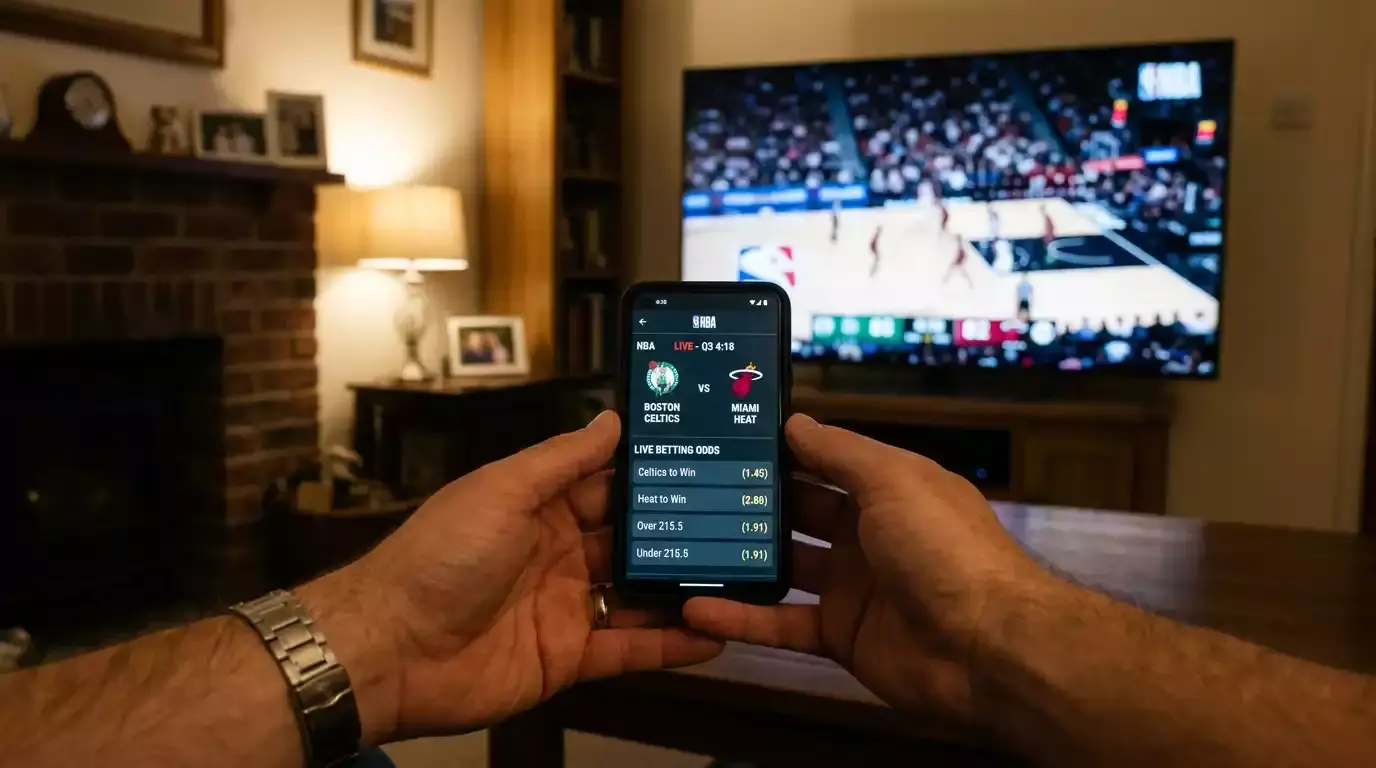
I placed my first NBA bet in 2017 — a straightforward moneyline on the Golden State Warriors because I’d watched them demolish someone on a YouTube highlight reel. I won, felt like a genius, then lost the next four bets chasing that same feeling. That experience taught me something every beginner needs to hear: basketball NBA betting tips that actually work start with understanding the sport, the markets, and the UK betting landscape before you risk a single pound.
Basketball now accounts for 15 to 18 per cent of all global betting activity, and the UK share is growing fast. The NBA’s partnership with Prime Video has brought live games into millions of British living rooms, turning casual fans into active punters almost overnight. London’s O2 Arena hosted an NBA Global Game that drew over 18,000 spectators — a record for the event — and that wave of enthusiasm is spilling directly into the betting markets.
But here’s the thing: NBA betting is not football betting with taller athletes. The markets, the pace of scoring, the sheer volume of games — everything operates differently. If you’re coming from Premier League accumulators and expecting the same logic to apply, you’ll burn through your bankroll before Christmas. This guide strips the process back to what actually matters for a UK beginner: how the season works, how to navigate a bookmaker’s NBA section, and which mistakes will cost you money before you’ve learned enough to avoid them.
After grasping the basics, it is crucial to have all NBA betting markets explained so you know exactly where your money is going.
NBA Season Structure: Key Information for UK Bettors
My first season following the NBA, I didn’t realise that the regular season runs 82 games per team. Eighty-two. Compare that to the Premier League’s 38 match days and you start to see why approach matters more than any single pick.
The NBA season breaks into distinct phases, each with different betting implications. The regular season runs from mid-October through mid-April, with 30 teams split across the Eastern and Western Conferences. Every team plays 82 games — 41 at home, 41 on the road — which creates an enormous volume of betting opportunities but also an enormous volume of noise. Early-season results can be wildly misleading as teams integrate new players and coaches experiment with rotations.
After the regular season comes the Play-In Tournament, a relatively new addition where teams ranked 7th through 10th in each conference compete for the final two playoff spots. This mini-tournament has become a goldmine for bettors who understand its pressure dynamics — teams fighting for survival play differently than teams cruising through a regular Tuesday in January.
The playoffs follow a best-of-seven format across four rounds: First Round, Conference Semifinals, Conference Finals, and the NBA Finals. What matters for betting is that playoff basketball is a fundamentally different sport. Pace slows, defensive intensity increases, rotations tighten from ten players down to eight. Regular-season stats become less reliable, and coaching adjustments between games create volatility that the markets don’t always price correctly.
Then there are structural quirks that directly affect your bets. Load management — where teams rest healthy star players during the regular season to preserve them for the playoffs — has become standard practice. A team favoured by six points at the bookmaker might suddenly lose their best player to a “rest day” announced two hours before tip-off. If you’re betting early lines without checking injury reports, you’re essentially gambling blind.
Tanking is another factor. Teams with poor records sometimes deliberately field weaker lineups late in the season to improve their draft lottery position. This doesn’t get announced publicly, but you’ll notice it when a team’s starters are suddenly getting 20 minutes instead of 35. Understanding these dynamics — and checking the schedule for back-to-back games, long road trips, and rest advantages — gives you an edge that most casual bettors ignore entirely.
Placing Your First NBA Bet at a UK Bookmaker
The first time I opened a bookmaker’s NBA section, I was genuinely overwhelmed. There were markets I’d never heard of — player props, quarter lines, race to 20 points, alternative spreads — and the decimal odds format, while standard in the UK, looked completely different from the American odds I’d been reading about online. Let me walk you through what a beginner actually needs to do, step by step.
Start by picking a UKGC-licensed bookmaker. This isn’t optional and it isn’t a formality. The UK Gambling Commission licence means the operator is regulated, your funds are protected, and you have access to responsible gambling tools like deposit limits and self-exclusion. Any bookmaker operating legally in the UK will display their licence number at the bottom of their site.
Once you’ve opened an account and deposited funds, navigate to the basketball or NBA section. Most UK bookmakers list NBA under “Basketball” in their sports menu, though some bury it beneath more popular UK sports. You’ll see a list of upcoming games with the most common markets displayed: moneyline (match winner), point spread (handicap), and totals (over/under).
For your first bet, I’d recommend a straightforward moneyline wager. This is simply picking which team wins the game. The odds are displayed in decimal format — so if you see the Boston Celtics at 1.45 and the Charlotte Hornets at 2.90, those numbers tell you what a one-pound bet returns. A winning pound on the Celtics pays 1.45 total (your original pound plus 45p profit). A winning pound on the Hornets pays 2.90 total (your pound plus 1.90 profit). The lower the decimal number, the stronger the favourite.
Before confirming your bet, check three things. First, the stake — start small, genuinely small, even if it feels pointless. A pound or two while you’re learning is money well spent on education. Second, check the potential return displayed on your bet slip. Third, confirm the market is what you think it is. I’ve seen beginners accidentally bet on first-half spreads thinking they were backing the full-game result. The bet slip should clearly state the market, the selection, the odds, and the potential return. Once you’re satisfied, confirm.
One practical note: NBA games typically tip off between 11pm and 3:30am UK time on weekdays. If you’re planning to watch and bet live, that’s a late night. Weekend games often start earlier, around 5pm or 8pm UK time, which makes them more accessible for UK punters who want to follow the action. You don’t need to watch every game you bet on — but watching helps you develop an intuitive understanding of how NBA basketball flows, which eventually feeds into better betting decisions. For a deeper look at how NBA point spread betting works in decimal odds, that guide breaks down the maths step by step.
Three Mistakes First-Time NBA Bettors Make
Every one of these mistakes cost me money personally. I’m listing them not because they’re theoretical dangers but because they’re the three traps I fell into during my first NBA betting season — and I’ve watched dozens of UK punters do exactly the same thing since.
The first mistake is parlay overload. UK betting culture loves accumulators — the dream of turning a fiver into five hundred quid is hardwired into how we think about weekend betting. But NBA accumulators are a different beast. With 15 games on a typical slate night, the temptation to throw six or seven moneyline favourites into an acca feels safe. It isn’t. Even heavy NBA favourites lose outright roughly 25 to 30 per cent of the time. Stack six of those together and the probability of a clean sweep drops below 20 per cent. The bookmakers know this — parlays account for roughly 30 per cent of betting volume but generate around 60 per cent of their gross revenue. That gap is your money.
The second mistake is ignoring the schedule. In the Premier League, every team plays once a week and you can evaluate form over consistent intervals. The NBA doesn’t work like that. Teams play three to four games per week, sometimes on consecutive nights. A team that demolished an opponent on Monday might be exhausted, on the road, and missing a rested star on Tuesday. I once backed a team that was 8-2 in their last ten without realising they were on the second night of a back-to-back after flying across three time zones. They lost by 15. The schedule is data, and ignoring it is like betting on a football match without checking who’s injured.
The third mistake is betting with your heart instead of your head. Everyone has a favourite NBA team — mine is the Pacers, which has given me plenty of practice in losing gracefully. But when you back your team because they’re your team, you stop analysing and start hoping. Emotional attachment blinds you to rest disadvantages, poor matchups, and unfavourable odds. If you can’t bet against your favourite team when the data says you should, don’t bet on their games at all. Keep fandom and bankroll in separate compartments.
Start your journey on the right foot by following the best basketball predictions site in the UK.
Where Beginners Go from Here
Starting out in NBA betting as a UK punter is simpler than most guides make it sound. You need a licensed bookmaker, a basic understanding of the season structure, and the discipline to start small and learn from every bet — win or lose. The complexity comes later, when you start digging into advanced stats, situational edges, and market inefficiencies. For now, focus on placing single bets on markets you understand, tracking your results honestly, and resisting the pull of the accumulator until you’ve got a few months of experience under your belt. The NBA season is long. There’s no rush, and the markets will still be there tomorrow night.