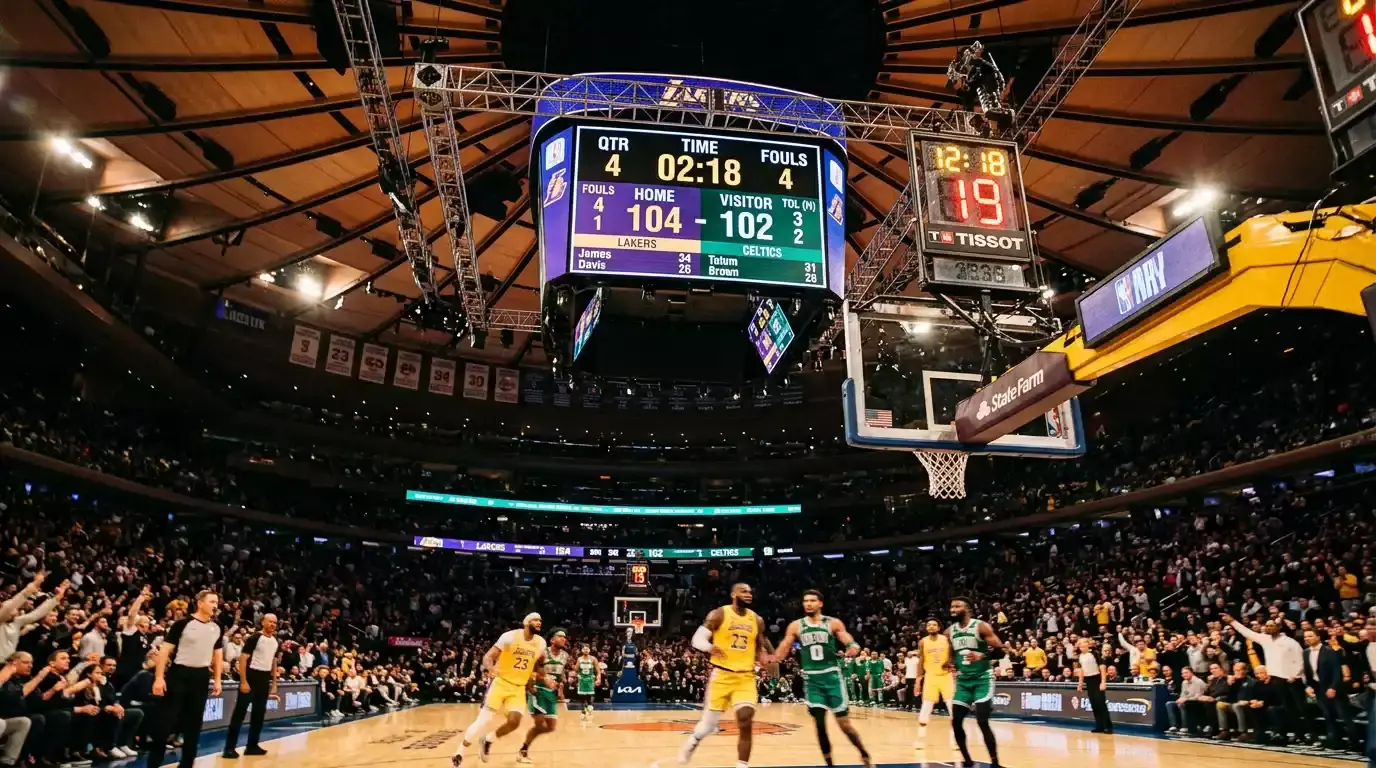


In September 2022, I placed a futures bet on the Denver Nuggets to win the NBA championship at 14.00 decimal odds. By December, they were down to 5.50. By the time they lifted the trophy in June, the odds had collapsed to 1.30. That single bet returned more profit than three months of daily spread wagers — not because I was smarter on that particular day, but because futures markets reward patience and conviction in a way that daily betting never does.
NBA futures are the opposite of the nightly tips culture that dominates basketball betting content. Instead of hunting for today’s best play, you’re assessing which teams and players will accumulate value over months. Basketball accounts for 15 to 18 per cent of all global betting activity, and a meaningful slice of that volume sits in futures markets that open before the season starts and stay open year-round. For UK punters, futures offer something rare: a market where the early bird genuinely does get the best odds, and where the bookmaker’s model is most vulnerable to being wrong.
Primary NBA Futures Bets Available at UK Bookmakers
Most UK punters think “futures” means picking the champion. It’s the biggest market, but it’s far from the only one — and it’s not always the most profitable.
Championship outright is the marquee futures bet: pick the team that wins the NBA Finals. UK bookmakers typically offer odds on all 30 teams, though the tail end — teams with virtually no chance — may only appear at the larger operators. Championship futures carry the highest potential returns because you’re betting on an outcome that won’t resolve for months, and the bookmaker applies significant margin to compensate for the time value of your money sitting locked in the bet.
Conference winner markets narrow the field to 15 teams per side. The odds are shorter than championship outright, but the path to cashing is simpler — your team only needs to win the Eastern or Western Conference. Division winner markets narrow it further to five teams. These smaller-pool futures can offer better value because they receive less public attention, meaning the bookmaker’s lines reflect less collective sharpening.
Individual award futures — MVP, Defensive Player of the Year, Rookie of the Year, Most Improved Player — are a separate category entirely. These markets price individual performance over a full season, and they’re influenced by narrative as much as statistics. The MVP race, in particular, is notorious for mid-season narrative shifts that create wild odds fluctuations. A player who looks like the clear MVP in January might drift to 5.00 after a two-week slump, even if his season-long stats remain elite.
Season win totals round out the futures landscape. Bookmakers set an over/under on each team’s regular-season wins — say, Boston Celtics over/under 54.5 wins — and you bet whether they’ll finish above or below that line. Win totals are considered one of the sharpest futures markets because they’re grounded in mathematical projections rather than narrative. I’ll cover these in depth separately, but the key point here is that win totals often resolve more predictably than championship or award futures because they depend on 82 games of data rather than a single playoff run.
When to Place NBA Futures for Maximum Value
Timing is everything in futures — and I mean that literally, not as a cliche. The same bet placed in July versus January can differ by a factor of three or more in odds.
The best value window for championship futures opens immediately after the NBA Draft in late June. Rosters have been reshuffled, free agency is in full swing, and bookmakers are setting lines based on projections that haven’t been tested by a single game. If you’ve done your offseason homework — evaluating draft picks, free agent signings, and coaching changes — you can identify teams whose odds haven’t yet adjusted to their improved roster. By October, when the season starts, the market has absorbed much more information and the odds have compressed.
A second value window opens around the trade deadline in February. The NBA trade deadline reshuffles rosters overnight, and bookmakers need time to fully recalibrate their championship and win-total odds. Teams that make significant acquisitions may see their odds shorten within hours, but the full impact of how a new player fits into an existing system takes weeks to assess. If you believe a trade has made a team substantially better than the market currently prices, the 48-hour window after the deadline closes is your entry point. The historical record supports this: home court advantage in the Finals stands at 71.79 per cent, and teams that enter the playoffs with the best record — often secured through deadline upgrades — carry a significant structural edge.
For MVP futures, the optimal timing is different. The strongest value often appears after a player’s team loses two or three games in a row and the narrative briefly turns against them. The underlying statistics haven’t changed, but the betting public reacts to visible results more than cumulative data. These dips rarely last more than a week, so monitoring MVP odds daily during the season — even if you’re not placing daily bets — allows you to pounce when the market overreacts.
Hedging and Cash-Out Strategies for NBA Futures
That Nuggets bet I mentioned? I hedged it in the Conference Finals. The original stake at 14.00 was sitting at an implied value several times my initial investment, and I took a partial cash-out to lock in profit regardless of the final outcome. That decision — hedging rather than letting it ride — was harder emotionally than any spread bet I’ve ever placed.
Hedging a futures bet means placing a secondary wager on a different outcome to guarantee profit or reduce risk. If you’ve backed a team at long odds and they reach the Conference Finals, you can bet against them in individual games to lock in a return. The maths is straightforward: if your original bet stands to return a large amount, a small bet on the opposing side in the next round secures a guaranteed profit slightly below the maximum potential return.
Cash-out is the bookmaker’s version of hedging, offered as a button on your bet slip. The cash-out amount is always less than what you’d earn by hedging manually, because the bookmaker takes a margin on the cash-out calculation. In my experience, the gap between a manual hedge and a bookmaker cash-out ranges from 5 to 15 per cent, depending on the operator and the timing. For large positions, hedging manually is almost always more profitable. For small positions where the effort of placing a separate bet isn’t worth the margin difference, cash-out is convenient.
The emotional discipline required for futures hedging is underrated. You’ve held a position for months, watching the odds shorten, and the temptation to let it ride for the full payout is powerful. My rule: once a futures bet reaches three times its original value, I take at least one-third off the table. That guarantees a profit and lets the remaining position play out with house money. It’s not optimal in every scenario, but it’s sustainable — and sustainable beats optimal every time in the long run.