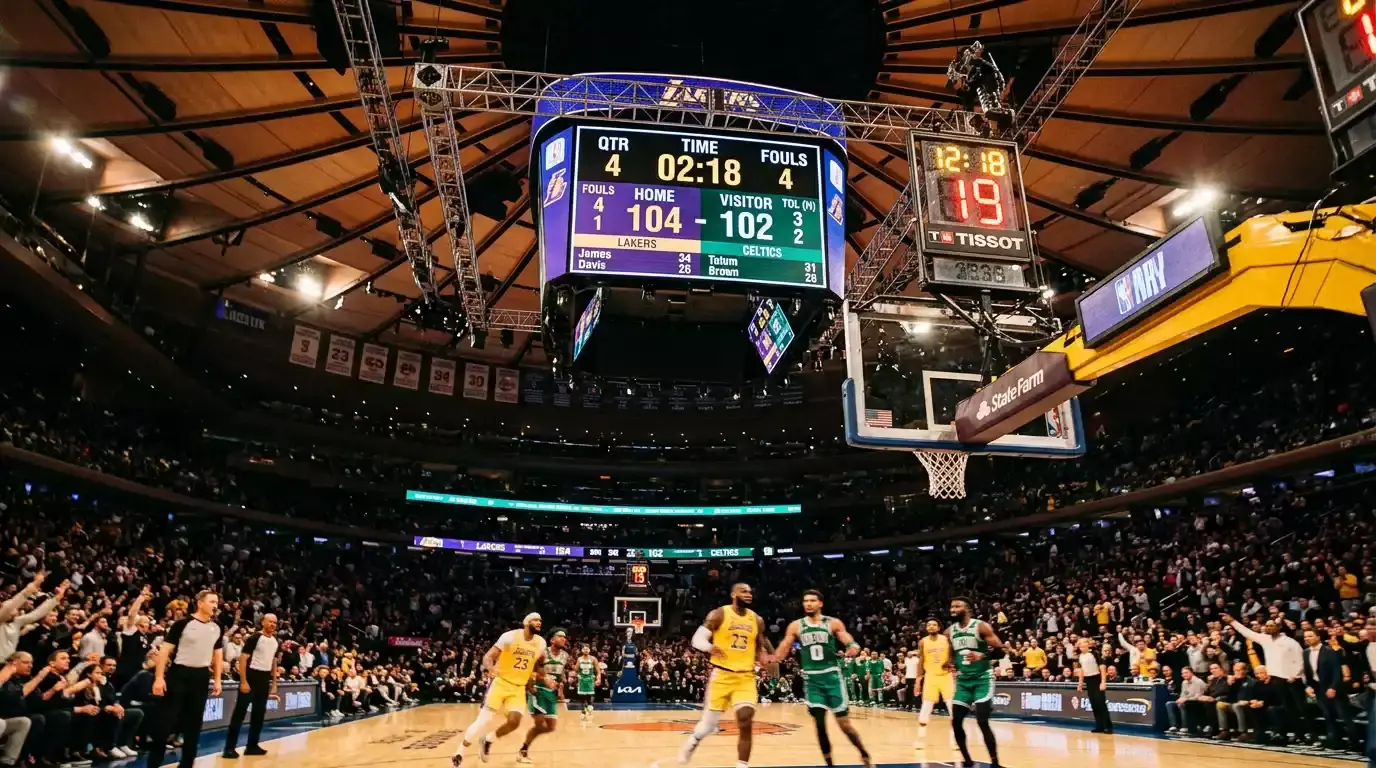


The first time I placed a live NBA bet, I panicked. The odds were shifting every fifteen seconds, I could not find the market I wanted, and by the time I submitted my slip, the line had moved a full point against me. I closed the app and told myself live betting was not for me. That was six years ago. Today, in-play NBA wagers account for nearly half my total handle, and they produce a higher ROI than my pre-game selections.
What changed was not my reaction speed – it was my preparation. Live NBA betting is not about frantically chasing odds in real time. It is about identifying specific in-game situations where the live market overreacts or underreacts, and having a plan for those situations before the ball is tipped. In-play wagering now generates 62.35% of total online betting revenue in the United States, growing at a compound annual rate of 13.62% through 2031, and the NBA’s structure makes it uniquely suited to this format. High-scoring, fast-paced, with frequent timeouts that pause the action and let both bettors and algorithms recalibrate – basketball gives you more natural entry points for live bets than any other major sport. For UK punters willing to learn the rhythm, the edges are real and the market is still inefficient enough to exploit.
Live bettors can find massive edges by understanding fourth-quarter betting dynamics when teams start resting their starters.
Profit Patterns: Live NBA In-Play Betting Markets and Analytics
Football gives you 90 minutes and maybe two or three goals. Tennis gives you dozens of points but limited market variety between them. The NBA gives you 48 minutes of game clock spread across four quarters, 200+ combined points, an average of 15-20 lead changes per game, and mandatory timeouts every few minutes that create natural windows for odds recalculation and bet placement. No other major sport offers this combination of scoring volume, structural pauses, and market depth.
The scoring frequency is what makes NBA live betting fundamentally different from in-play football wagering. A single goal in football can shift the live odds dramatically and permanently. A single basket in the NBA adjusts the odds by a fraction. That granularity means live NBA markets are more continuous – they move in small increments rather than lurching from one state to another – which creates more opportunities to find moments where the market has overreacted to a short-term run or underreacted to a tactical shift.
Wang et al.’s research across 2,295 NBA games over ten seasons provides the statistical backbone for understanding when live betting edges emerge. Their most striking finding for in-play bettors: only 19% of games remain within 10 points entering the fourth quarter. That might sound discouraging – if 81% of games are effectively decided before the final period, where is the live betting value? The answer is in the 19%. Those competitive games produce the richest live markets, the most volatile odds, and the widest spreads between bookmaker algorithms. When a game enters the fourth quarter within single digits, the live spread and live totals become highly responsive to game events, and the operators who set those odds are relying on models that do not always capture the human element – coaching adjustments, foul trouble, and the psychological dynamics of a tight game.
The NBA’s timeout structure amplifies this effect. Each team gets seven timeouts per game, including two mandatory TV timeouts per quarter. Every timeout freezes the action for one to three minutes, giving live betting algorithms time to recalculate but also giving you time to assess whether the odds adjustment is accurate. In my experience, the first odds update after a timeout following a big run often overcorrects – if a team has just gone on a 12-0 run to cut a deficit from 15 to 3, the live line might swing too far toward that team, because the algorithm weights the immediate scoring run more heavily than the broader game context. That overcorrection is the window.
When to Strike: Timing Windows in NBA In-Play Markets
Not every minute of an NBA game is created equal for live bettors. I have tracked my in-play results by game period for the past three seasons, and the data reveals clear patterns in when the live market is most and least efficient. Here are the windows I focus on, ranked by the consistency of the edges I have found.
The start of the second quarter is my favourite entry point. The first quarter has ended, the starters have played 8-10 minutes, and the opening lineups for Q2 typically feature bench-heavy rotations. The live market often carries forward the momentum or narrative from the first quarter without fully adjusting for the fact that different players are now on the floor. A team that trailed by 8 at the end of Q1 because their starting lineup matched up poorly might have a bench unit that is actually superior to the opponent’s reserves. The live line at the start of Q2 rarely reflects this – it is still anchored to the first-quarter result.
Halftime is a transition point rather than an entry point. Most bookmakers suspend live markets during the break and reopen with adjusted lines that incorporate the first-half data. Those reopening lines tend to be well-calibrated because the operators have had 15-20 minutes to recalculate. I rarely bet at the halftime reopening unless I am watching a game where I have spotted a specific tactical adjustment that the numbers alone would not capture – a switch in defensive scheme, for instance, or a coach going to a lineup combination that has historically performed well.
The start of the fourth quarter is where the highest-variance live betting opportunities live. If the game is competitive – within that 19% window of games still within 10 points – the live market is hypersensitive to every basket. A quick 5-0 run can shift the live spread by 2 or more points, and if you have pre-game context that tells you the team on the receiving end of that run is actually the better fourth-quarter team (based on clutch-time net rating or late-game defensive metrics), you can enter at a price that overvalues the short-term momentum. I have detailed the dynamics of fourth-quarter live betting separately because it warrants its own deep analysis.
Timeout windows immediately following a significant run – defined as 7+ unanswered points – are the most tactically interesting moments for live bettors. The trailing coach calls a timeout to stop the bleeding, the leading team’s algorithm-driven odds adjust sharply, and for 60-90 seconds you have a window to assess whether the run is sustainable (driven by structural factors like a mismatch) or unsustainable (driven by a couple of lucky three-pointers). My rule is simple: if the run was driven by transition baskets and open threes off turnovers, it is likely unsustainable, and the live line on the trailing team represents value. If the run came from repeated exploitation of a defensive mismatch, the adjustment might be correct or even insufficient.
One window I avoid: the final two minutes of a close game. The live odds during this stretch are extremely efficient because the entire market is watching, the algorithms have maximum data, and the variance introduced by intentional fouling and desperation three-pointers makes the outcome nearly random. I close my betting apps during the final two minutes and just watch the game. It is better for my bankroll and my blood pressure.
Live NBA Markets Available at UK Bookmakers
Walking into the live NBA betting interface at a UK bookmaker for the first time can feel overwhelming. Markets scroll past in real time, odds flash green and red, and the sheer number of options – live spread, live total, next team to score, quarter winner, player specials – makes it hard to know where to start. Here is what is actually available and what is worth your attention.
The core live markets mirror the pre-game equivalents: live spread (handicap), live moneyline (match winner), and live total (over/under on combined points). These are available at every major UK operator throughout the game, though the depth of the odds varies. Some bookmakers update their live NBA lines every 20-30 seconds; others can lag by a minute or more during fast-moving sequences. That latency difference matters – when I am betting live, I want the operator with the fastest updates, even if their margin is marginally wider, because stale odds in a live market are either a trap (the line has already moved against you in reality) or an opportunity (you can lock in a price the bookmaker has not yet adjusted).
Quarter and half markets add a layer of granularity. You can bet on the winner of each individual quarter, the total points scored in a quarter, or the half-time result with a live spread. Quarter totals are particularly interesting because they allow you to capitalise on pace assessment in real time – if the first quarter produced 58 combined points in a game with a full-game total of 215.5, the second-quarter total might be set at a level that does not account for the faster-than-expected pace. Mobile apps handle 78% of all online betting globally, and for live NBA betting specifically, the mobile interface is not just convenient – it is necessary. Having two or three bookmaker apps open on your phone during a game lets you compare live prices and take the best available line within seconds.
Next-basket and next-scoring-method markets are the most volatile live offerings. They reset after every scoring event, which means the pace of betting is intense and the margin the bookmaker builds in is typically higher than on game-level markets. I use these sparingly and only in specific situations – for example, betting on the next basket being a free throw when a team is in the bonus and the opposing team is playing aggressive defence that has already produced four fouls in the quarter. The edge on these micro-markets comes from real-time observation rather than statistical modelling, which is why watching the game is a prerequisite for live betting, not an optional extra.
Player-specific live markets – will a player score over/under a certain number of points in the next quarter, or record an assist before a rebound – are growing in availability at UK operators but remain less developed than at US-facing books. The NBA has actively proposed restrictions on some of these granular player markets, including bench-player props and single-play bets like first basket, citing integrity concerns. For UK bettors, the practical takeaway is to focus your live player prop activity on starting-calibre players in well-established markets rather than niche props on reserve players that might be delisted in coming seasons.
Risk Management in Fast-Moving NBA Markets
Adam Silver, the NBA’s commissioner, has acknowledged the challenge directly: “We’re learning as we go. Working with the betting companies, putting in place additional controls to prevent manipulation.” That candour from the league’s top executive tells you something important about the live betting landscape – even the NBA recognises that the speed and volume of in-play wagering creates unique risks that the industry is still figuring out how to manage. If the league itself is cautious, individual bettors should be even more so.
The biggest risk in live NBA betting is not a bad read on a game. It is the emotional momentum that the format generates. When you win a live bet and the profit hits your account within minutes, the dopamine rush is immediate and intense. That rush makes you want to bet again, right now, on the next available market. UK bookmakers process 290.03 million online bets on real events every single month, and a meaningful portion of that volume comes from live bettors placing rapid-fire wagers during a single game. I have been there – one good read on a second-quarter spread leads to a reckless third-quarter total bet leads to a “why not” fourth-quarter player prop. By the end of the game, the profit from the first bet has been wiped out by two impulsive follow-ups.
My risk management framework for live betting has three hard rules. First, a maximum of two live bets per game, period. This forces me to be selective and eliminates the cascading bet pattern that erodes profits. Second, each live bet is sized at half my standard pre-game unit. The variance on live bets is higher because you are working with less information (you have not had time to do full pre-game analysis on the in-game situation), so the stake should reflect that uncertainty. Third, I never bet live on a game where I also have a pre-game position unless the live bet is explicitly a hedge. The temptation to “double down” on your pre-game side when the live market moves in your favour is strong, but it increases your risk exposure on a single game beyond what any sound bankroll management plan would recommend.
Cash-out features deserve a specific warning. Every major UK bookmaker offers cash-out on live NBA bets, and the interface is designed to make it feel like a smart, empowering decision. In practice, the cash-out price always includes the bookmaker’s margin – you are selling your bet back at a discount. There are rare situations where cashing out is correct (locking in profit when your analysis of the game has changed materially), but as a default behaviour, habitual cash-out usage reduces your long-term returns. I use it perhaps once every 50 live bets.
The UK Live-Betting Schedule: When NBA Games Are On
The NBA schedule is built for an American audience, which means UK bettors face a timezone challenge that shapes when and how live betting is practical. Understanding the rhythm of the week is essential for building a sustainable live betting routine that does not wreck your sleep.
On weekday evenings, the first NBA games typically tip off at 12:00 midnight UK time (7:00 PM Eastern). The bulk of the slate starts between 12:30 and 1:30 AM, with West Coast games beginning at 3:00 or 3:30 AM. If you are working a standard daytime job, the realistic live betting window on weeknights is 12:00 to 2:00 AM – enough to catch the first halves of early-tip games and, if you have the stamina, the third quarters. I do my weeknight live betting in bed with my phone, which is not ideal for concentration but is the pragmatic reality of following the NBA from the UK.
Weekends offer much more accessible windows. Saturday and Sunday afternoon games in the US tip off at 5:30 or 6:00 PM UK time, with the main evening slate starting at 11:00 PM or midnight. Sunday afternoon games, particularly the national TV slate, are the best live betting opportunities for UK punters – the games are higher-profile (meaning market liquidity is deeper and odds are more competitive), the tip-off times are manageable, and you can watch via Sky Sports, TNT Sports, or NBA League Pass while betting.
The UK timezone situation creates one genuine strategic advantage for pre-game bettors that spills into live betting preparation. NBA opening lines are typically released in the early afternoon US time, which is evening in the UK. By the time you wake up the next morning, the lines have been out for 12+ hours and sharp money has already moved them. You can review the overnight movement, identify games where the line has shifted significantly, and prepare your live betting plan with a clearer picture of market sentiment than someone who only looks at lines an hour before tip-off. That preparation – knowing which games have attracted sharp action and in which direction – gives you context for interpreting live odds movement during the game itself.
Sky Sports broadcasts approximately 170 NBA games per season, with a focus on marquee matchups and storylines relevant to UK audiences. TNT Sports and Amazon Prime Video have expanded UK coverage significantly, and the NBA’s London games – the most recent of which drew over 18,000 fans to the O2 Arena – have pushed the league into mainstream UK sports consciousness. For live bettors, televised games are the only ones worth betting in-play. Watching a live stats feed without video is a poor substitute – you miss the visual cues that inform the best live betting decisions.
Track the momentum shifts and find the most accurate NBA betting tips to maximize your in-play profits.